Take the sting out of warranty management: WASP unlocks 98% approval for South African dealers

Take the sting out of warranty management: WASP unlocks 98% approval for South African dealers

Fast facts

Leading automotive OEMs and dealer groups

Warranty management in South Africa is increasingly shaped by complex processes, tighter audit requirements, and high administrative overhead, all of which expose dealers to chargebacks, limit visibility into claims, and create a need for more flexible commercial models.

South Africa

MSX’s WASP program streamlines warranty operations, achieving a 98% claim approval rate and significant cost savings, while freeing dealer teams to focus on customer service.

Moving beyond legacy processes and dealer realities

The South African mobility sector is undergoing a period of profound transformation. As global standards rise and consumer expectations shift, warranty management has emerged as a critical battleground for both OEMs and dealer networks. The industry’s rapid evolution is not without its hurdles – dealers, in particular, are navigating a landscape marked by operational complexity and heightened scrutiny.

Within this environment, several persistent challenges have come to the forefront:

  • Escalating administrative demands

    Dealers are contending with increasingly complex warranty processes, often requiring manual effort, and slowing down claim cycles.

  • Technician documentation gaps

     Insufficient detail in technician write-ups can undermine claim approvals, leading to delays and missed opportunities for improvement.

  • Risk of OEM chargebacks

    Inconsistent documentation and gaps in compliance expose dealers to financial penalties, impacting profitability and trust.

  • Need for commercial flexibility

    Dealers require adaptable solutions that can accommodate fluctuating claim volumes and diverse business models, from subscription-based arrangements to pay-per-claim options.

  • Limited performance visibility

    Without timely insights into claim status and outcomes, dealers struggle to manage and optimize their warranty operations proactively.

Despite these obstacles, there is a foundation for progress. The widespread adoption of a unified, paperless workflow platform across South African dealerships has created new opportunities for standardization and scalability. By leveraging this digital infrastructure, innovative programs, such as MSX’s Warranty as a Service Program (WASP), are empowering dealers to move beyond legacy processes – unlocking greater consistency, transparency, and operational efficiency.

Expert-led, data-driven, and scalable

When the South African dealer network of a leading automotive OEMs reached a critical juncture in their warranty operations, the need for a transformative partner became clear. Their legacy processes – fragmented, manual, and increasingly outpaced by regulatory demands – were no longer fit for purpose. Dealers faced mounting pressure to deliver compliance, efficiency, and transparency, all while navigating the realities of fluctuating claim volumes and diverse business models.

Recognizing these challenges, they turned to MSX for a solution that would not only address immediate pain points but also lay the groundwork for sustainable growth. With a reputation for operational transformation and a nuanced understanding of local market dynamics, MSX collaborated with key stakeholders to design a warranty program that delivers measurable impact at every stage. The deployment of WASP is far from generic. MSX collaborated closely with dealers, designing an operating model that delivers measurable impact at every stage of the warranty lifecycle. This approach is holistic, blending advanced technology, specialist knowledge, and robust governance to set a new benchmark for dealer performance.

This transformation is underpinned by a robust network architecture: WASP’s shared service hub integrates seamlessly with dealer platforms, enabling multi-brand, multi-site coverage under centralized governance. Through this infrastructure, key performance indicators – such as approval rate, submission turnaround, first-time-right rate, pre-audit closure rate, and training coverage – are continuously tracked and reported via monthly dashboards and quarterly OEM reviews. This commitment to transparency and continuous improvement ensures that the WASP program is not only redefining what’s possible in warranty management, but also setting new standards for the industry and its stakeholders.

Unleashing operational excellence with WASP

WASP’s integrated network and governance model lay the foundation for a new era in warranty management, but it is the program’s day-to-day impact that truly sets it apart. Across South Africa, our client’s dealer network has experienced a significant change in operational performance, empowered by a system that translates strategic vision into measurable outcomes. The combination of seamless platform integration, centralized expertise, and transparent reporting means that efficiency, compliance, and innovation are no longer aspirational – they are the reality for every dealer and OEM engaged with WASP.

The impact is clear and measurable. Dealers now operate with unprecedented efficiency and confidence, supported by a program that delivers results where it matters most:

Claim approval rate
0 %

WASP drives a 98% approval rate for claims submitted to OEMs, ensuring that nearly every valid claim is processed successfully. The average turnaround time from receipt to submission is just 2.5 days, enabling dealers to maintain momentum and optimize cash flow. With approximately 5,334 claims processed each month, the scale and consistency of the program are evident.

Saved per quarter
R 0

Through this program, dealers and OEMs have achieved average quarterly savings of R913,000, while managing an annual claim value of approximately R200.7 million across 64,000 claims. These efficiencies translate into a 15% year-on-year reduction in OEM warranty spend and an impressive 94% first-time approval rate for dealer claims.

Pre-audit issue resolution
0 %

WASP’s rigorous approach to documentation and coding has led to a significant reduction in chargebacks, protecting dealers from unnecessary financial exposure. Pre-audit findings are addressed before formal OEM audits, lowering the risk of penalties and ensuring peace of mind. The program’s liability coverage for claim-handling errors further reinforces trust and accountability.

Caims handled annually
0

Targeted training initiatives uplift the capabilities of technicians and advisors, while dealer staff are freed from administrative burdens to focus on delivering exceptional customer service. The result is a more empowered workforce and a more satisfying customer experience.

The buzz behind smarter warranty solutions

As the program continues to evolve, MSX is exploring automation and AI to further streamline rule-based entries and validations. Early estimates suggest that these innovations could significantly reduce workloads for high-volume, low-complexity claims, freeing up dealer teams to focus on higher-value activities and further improving cycle times.

The WASP program stands as a benchmark for operational efficiency, cost reduction, and compliance. Its proven results and scalable model position it for expansion into neighboring markets, offering OEMs and dealers a turnkey solution for warranty optimization. By adopting WASP, clients unlock measurable improvements in claim efficiency, cost recovery, and dealer performance – empowering their teams to focus on what matters most: delivering exceptional customer experiences.
To find out how MSX can help expand your business, visit:

Related case studies

Five pillars powering modern mobile service excellence

Five pillars powering modern mobile service excellence

As customer expectations rise and operational challenges mount, dealerships are becoming architects of mobility experiences that are personalized, on-demand, and seamlessly woven into the fabric of daily life. The pressure to deliver service “anytime, anywhere” is reshaping the very foundations of automotive aftersales, demanding new levels of agility, innovation, and customer-centricity. In this landscape, mobile service programs have emerged not as a fleeting convenience, but as a strategic lever for sustainable growth, enduring loyalty, and operational resilience.

This report dives deep into the forces driving this transformation, revealing how forward-thinking dealerships are leveraging mobile service to unlock new capacity, overcome technician shortages, and redefine what excellence looks like in a connected world. By embracing technology, investing in workforce development, and reimagining the customer journey, industry leaders are setting new standards for service delivery – meeting customers where they are, and turning every interaction into an opportunity for lasting engagement.

To stay informed about upcoming reports and events from MSX, submit your detail below.
Don’t miss out on new insights and discussions with our leadership team.

We’d love to hear from you

If you’d like to know more about MSX or how we can support your business, please fill out the form below.


Related Articles

Benchmarking redefined: Contour’s transformative approach to competitive analysis

Benchmarking redefined: Contour’s transformative approach to competitive analysis

In today’s fiercely competitive market, mobility players are striving to exceed industry standards. By comparing their performance with that of their competitors, organizations can uncover hidden opportunities, set ambitious yet achievable goals, and develop strategies to stay ahead. Competitive benchmarking has become an essential tool in this data-driven business landscape. Many businesses still struggle to understand how their competitors are performing, often relying on surveys to get the answers. Contour’s innovative benchmarking solution, however, uses real-time transactional data, providing a comprehensive, dynamic, and in-depth analysis of industry performance.

By redefining industry standards, Contour empowers businesses with actionable intelligence that drives strategic decision-making and operational excellence. This advanced approach enables organizations to gain a competitive edge by accessing insights, identifying areas for improvement, and making informed decisions that enhance overall performance. As a result, businesses can stay ahead of market trends, optimize their operations, and achieve sustained success in an increasingly competitive environment.

Revolutionizing benchmarking with real-time data analytics

Traditional benchmarking relies on surveys, which often lack depth, accuracy, and relevance. Contour disrupts this model by integrating transactional data analytics, allowing businesses to compare industry trends. It works by aggregating repair order data and other relevant metrics which is then normalized and securely shared through an executive mobile app and diagnostic portal.

One of the unique aspects of this solution is its ability to normalize data across different OEMs and independent repair chains. This normalization allows for meaningful comparisons and helps organizations identify areas for improvement. This approach enables businesses to:

Delivering insights through smart technology

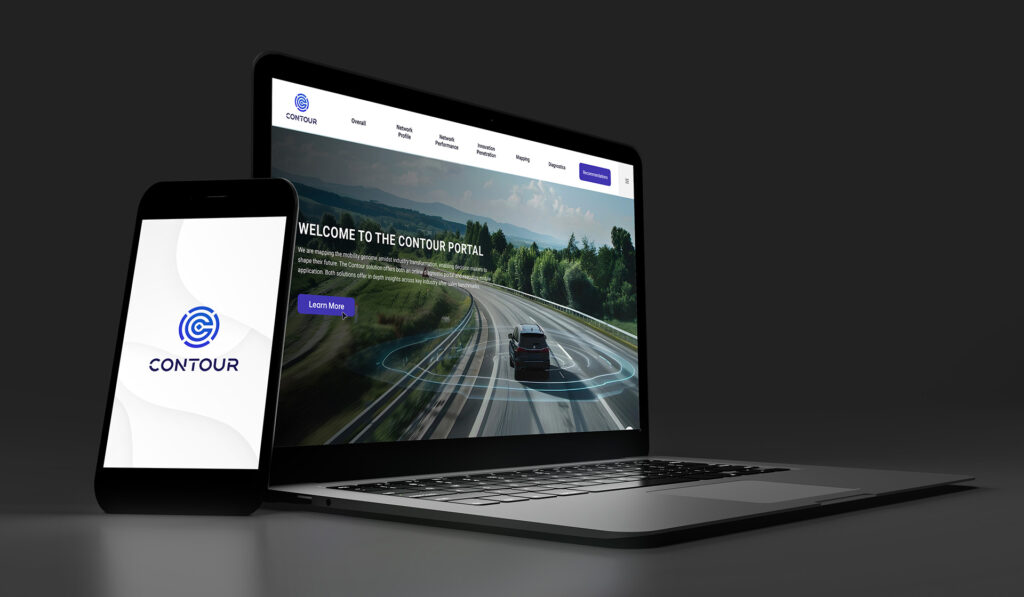
At the heart of Contour’s approach to benchmarking is the delivery of insights through smart technology, ensuring that these insights are both accessible and actionable by leveraging advanced technological solutions. Contour’s desktop Diagnostic Portal offers in-depth analysis with granular reports on brand performance and competitive analysis. This tool allows users to dive deep into the data, uncovering detailed insights that can drive strategic decisions and operational improvements.

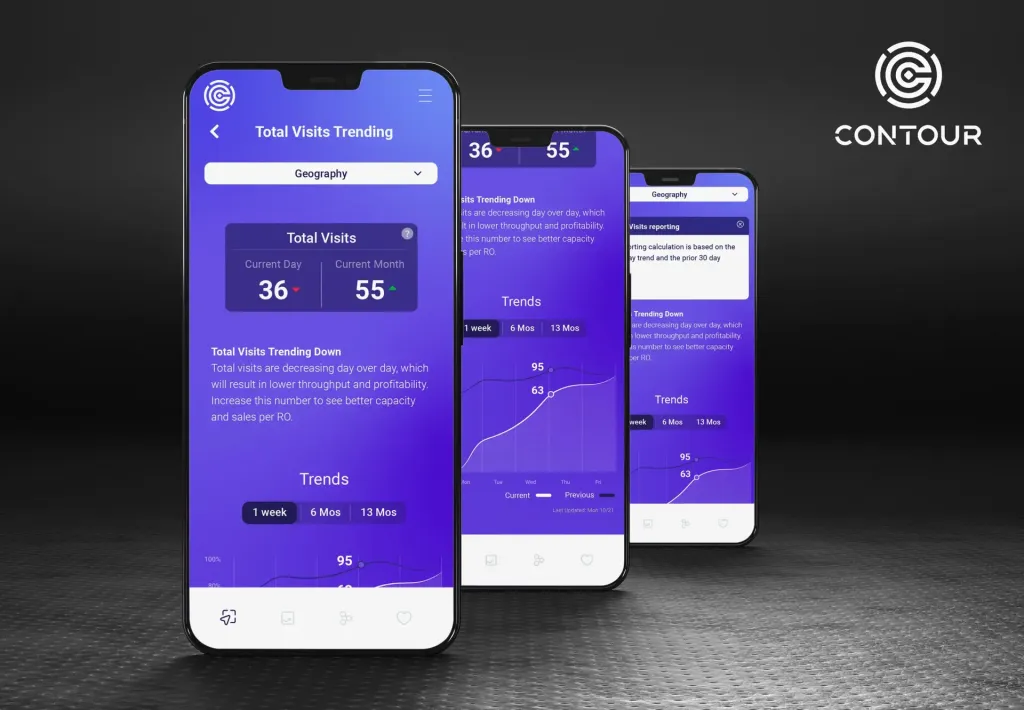
The Executive Mobile App provides a high-level, intuitive interface designed specifically for industry leaders who require quick, daily performance snapshots. This app is not only convenient, but it also empowers executives with the information they need to make informed decisions on the go. The app features AI-generated summaries and news aggregation, which enhance decision-making by providing a comprehensive view of the market landscape and highlighting key trends and developments.

Thought leadership and market intelligence

Looking ahead, Contour’s thought leadership initiatives aim to redefine benchmarking by integrating predictive business intelligence, AI-driven decision support, and globalized data trends. These modules are designed to not only anticipate market changes before they occur, allowing organizations to proactively adjust their strategies and operations, but also offer support to dealers and OEMs in identifying areas of concern and opportunity by analyzing vast amounts of data and providing actionable insights. Access to globalized data trends helps to expand competitive insights across international markets, enabling organizations to benchmark their performance on a global scale and stay ahead of industry trends.

Leading the evolution of benchmarking

The importance of the competitor benchmarking solution within Contour’s framework cannot be overstated. It not only helps organizations understand their position in the market but also provides actionable insights to drive improvements. By offering a comprehensive view of performance metrics, we’re enabling organizations to make informed decisions, optimize their operations, and ultimately achieve better business outcomes. By integrating predictive intelligence, smart indexing, and intuitive reporting, we’re empowering businesses to stay ahead of the competition and drive future success.

Contact us today to discover how Contour can transform your business and give you the competitive edge you need.

Contact the Author

Cory_Allen

Cory Allen

Global Delivery Leader, Actionable Insights

Cory_Allen

Cory Allen

Global Delivery Leader, Actionable Insights

Related Articles

Intelligent dealer assistance: AI-powered technical support for optimal performance

Intelligent dealer assistance: AI-powered technical support for optimal performance

Fast facts

 A leading, multinational automotive manufacturer

Faced with a high turnover of dealer technicians, multi-brand dealer complexities, and difficulties in retrieving specific diagnostic information, our client needed to streamline the troubleshooting process, improve diagnosis efficiency, and reduce the number of queries coming into the technical helpdesk.

Europe

MSX developed AI Virtual Assistant providing instant access to relevant technical documentation based on vehicle-specific diagnostic trouble codes (DTCs) or even generic open queries.

The challenge: Navigating multi-brand complexities

The dealer network of a leading, global manufacturer struggled with accessing multi-brand technical documentation efficiently. With technicians managing multiple brands, navigating different systems, login credentials, and search mechanisms proved cumbersome. This often led to delays in issue resolution, increased support tickets to the Technical Help Desk (THD), and, ultimately, prolonged vehicle off-road times. Additionally, inconsistent usage of Technical Service Bulletins (TSBs) resulted in inefficiencies and higher costs for manufacturers, negatively impacting customer satisfaction.

The solution: AI-powered chatbot implementation

MSX developed AI Virtual Assistant, an AI-powered chatbot that can answer specific questions and diagnosis codes. It provides specific recommendations via a link or document (PDF, Word), or as a summary, depending on the customer’s needs. The chatbot was made accessible to the THD agent providing instant access to relevant TSBs based on natural language queries or specific diagnostic trouble codes (DTCs). Its multi-language support allows agents to interact in various languages, improving accessibility across European markets.

The solution was designed with integration flexibility, allowing it to connect seamlessly to OEM databases or directly retrieve PDFs and other documents. This ensures that agents have easy access to the necessary information. It also includes performance analytics capabilities, which track usage patterns, frequent queries, and the most accessed TSBs.

Implementation was structured into key phases:

  • Feasibility study and requirements gathering

    Conducted workshops with the client to identify primary pain points and determine necessary integrations.

  • Development and integration

    Collaborated with MSX’s CTO team to build a chatbot using pre-configured AI platform, ensuring compatibility with the client’s existing systems.

  • Pilot deployment

    Deployed the chatbot in select dealerships to assess effectiveness and gather feedback.

  • Expansion and enhancements

    Planned for future scalability, including additional documentation integration, historical ticket analysis, and potential voice-command capabilities.

The results: up to 30% ticket reduction and 15% faster resolutions

The implementation of MSX AI Virtual Assistant continues to deliver significant improvements for the brand’s THD. A set of pre-defined Key Performance Indicators (KPIs) measures the frequency of usage, time to complete each issue, most frequent requests asked, and most frequent responses provided per model. This data is then used to continuously improve and optimize training processes facilitating faster issue resolution and helping reduce vehicle downtime, ultimately enhancing customer trust and satisfaction.

The AI chatbot has reduced agent response times for complex cases by 15% by providing faster access to prior solutions. Results also indicate that by providing technicians with direct access to documentation via self-service troubleshooting, the AI chatbot can improve technician efficiency, reduce vehicle downtime, optimize technician support, and increase customer satisfaction through quicker problem resolution. It could also reduce the number of incoming tickets by up to 30% leading to further cost reduction, improved accuracy, and standardization.

Looking ahead, MSX plans to enhance the system by leveraging machine learning for predictive issue resolution and enabling direct vehicle connectivity for real-time diagnostics and issue identification via remote data access. These improvements will deliver greater cost efficiencies for OEMs and further streamline their technical support processes.

The AI-powered chatbot represents a transformative step in automotive aftersales support, enhancing efficiency, reducing costs, and improving overall service quality. By leveraging AI and automation, MSX is pioneering smarter, faster, and more effective solutions for dealer networks and technical support teams, ultimately leading to greater customer satisfaction and significant cost savings for OEMs.

Related case studies

Advancing EV technical information: Harnessing gen-AI to revolutionize content creation

Advancing EV technical information: Harnessing gen-AI to revolutionize content creation

Fast facts

Bollinger Motors, a new EV manufacturer focused on medium-duty electric trucks in North America

The absence of detailed source information and documentation from many third-party suppliers posed a significant obstacle in generating the required technical content for service manuals, wiring diagrams, and other essential documents.

North America

MSX integrated a gen-AI tool within pubFoundry allowing Bollinger Motors to accelerate the development of technical content despite significant gaps in source documentation.

The challenge: Overcoming startup hurdles

Like many startups, Bollinger Motors, a new EV manufacturer focused on medium-duty electric commercial trucks in North America, faces numerous challenges in scaling its operations and ensuring product quality. Its vehicle assembly involves integrating multiple subsystems from various Original Equipment Manufacturers (OEMs) and suppliers. The organization’s biggest challenge, however, is the absence of detailed source information and documentation from many of these third-party suppliers. This posed a significant obstacle in generating the required technical content for service manuals, wiring diagrams, and other essential documents, making traditional content development a slow and costly process.

This lack of comprehensive source documentation would traditionally involve a time-consuming manual process where the team would reverse-engineer similar components, gather field data, validate assumptions, and author documentation from scratch. This slow process put Bollinger at risk of delaying its market entry, with no clear solution in sight.

The solution: Gen-AI integration with pubFoundry

To overcome these challenges, MSX introduced a game-changing tool, “Pete,” within their content management system (CMS), pubFoundry. Pete is a virtual assistant powered by Generative AI, specifically integrated with OpenAI, that facilitates the creation of technical content in XML, the format required by the CMS.

Pete functions by scraping the open web for relevant data and assembling a draft of the technical content based on user queries. For instance, if the MSX team needs information about how climate controls work on a specific type of cab, Pete retrieves data and structures it in XML format, tagging the metadata required for pubFoundry integration.

The information can then be integrated seamlessly into pubFoundry, which is crucial for storing, tagging, and publishing technical content. The AI tool within pubFoundry becomes indispensable, allowing the generation, mapping, and manipulation of content into formats that can be readily deployed across multiple platforms, including service manuals, owner manuals, and technician resources. This allows organizations to maintain consistency, accuracy, and scalability in their documentation.

Although the content Pete generates isn’t entirely ready for immediate use, it delivers a solid base that the MSX team can then refine and validate. This eliminates the need for manually gathering source data and reduces the time spent authoring technical information, significantly speeding up the overall process.

This AI-enhanced process is particularly beneficial for EV startups like Bollinger. Without legacy systems and the massive resources of established OEMs, disruptors often face difficulties when scaling rapidly. By utilizing generative AI, startups can overcome the hurdles posed by missing or incomplete documentation, thereby accelerating their product development and entry to market.

The pilot program was launched with an initial focus on two high-impact alert categories: oil quality and scheduled maintenance. By prioritizing actionable insights and minimizing false positives, the solution enabled more intelligent, timely, and human-centered customer interactions.

The result: Time and cost savings

By using Pete, MSX reduced the time and effort required to create technical content for Bollinger, demonstrating that the integration of Gen-AI has accelerated the technical content creation process. Instead of starting from scratch, the AI-generated content provided a robust foundation that saved considerable manual labor. Additionally, this process minimized the risks of errors and omissions that often occur when working with incomplete or missing documentation.

By leveraging AI, MSX shortened the path to market, ensuring that Bollinger can meet its goal of launching its trucks within a calendar year.

Gen-AI in technical content creation

As Gen-AI technology continues to evolve, its role in technical content creation is likely to expand. We believe that much like the evolution of translation services — where AI handles 90% of the content, with humans performing a final quality check — technical information authoring will eventually follow suit. Whoever integrates AI most effectively into their content creation workflows will have a significant competitive advantage.

“Partnering with MSX allowed us to know we will have the necessary technical information on-time and accurate for our end users, both Customers and Technicians, when launching our EV truck fleet.”

Rob Marcott, Aftersales Network Director, Bollinger Motors

Related case studies

Accelerating ahead: How OEMs can deliver next-generation automotive technical assistance

Accelerating ahead: How OEMs can deliver next-generation automotive technical assistance

Innovations and new digital realities are transforming the landscape of automotive customer support, reshaping how Original Equipment Manufacturers (OEMs) provide assistance. This article aims to illuminate the complexities and triumphs of this digital revolution by examining how OEMs can leverage newly emerging technologies or adapt their current strategies to form better solutions. This in-depth exploration of a technology-first approach reveals a future where precision and expertise converge, promising not just efficiency but profoundly transformative automotive customer support.

Navigating the digital maze: Challenges and triumphs

Transitioning to digital customer support presents new challenges as intricate as the solutions they demand. One of the primary hurdles faced by OEMs is the seamless integration of advanced technologies into their existing infrastructures. This integration demands agility and foresight. By embracing meticulous planning and innovative strategies, OEMs can bridge the gap between legacy systems and new solutions, ensuring a seamless transition into the digital age.

The over-the-air (OTA) revolution: A real-world scenario

At the core of this transformation lies OTA technology, a paradigm shift in automotive customer support. OTA technology empowers OEMs to remotely detect and anticipate issues in vehicles, significantly reducing the need for physical visits to service centers. Imagine this: you’re on a road trip, miles away from the nearest service station, and your vehicle’s diagnostic system detects a potential issue. In the traditional scenario, this could mean a stressful interruption and a lengthy visit to the nearest service station, possibly ruining your trip. However, with OTA technology, the OEM can remotely diagnose the problem, download necessary updates, and ensure your journey continues uninterrupted. These types of predictive solutions will help to alleviate concerns and redefine customer expectations.

From reactive to proactive: Evolving challenges and opportunities

As vehicles grow increasingly complex, technical help desks (THDs) face the daunting task of not just keeping pace but staying ahead. The digitalization of services, though time-consuming and intricate, presents immense opportunities. By enabling dealers to remain autonomous through the use of predictive tools, THDs can transform service experiences from resolving incidents to preventing them altogether. This transition, however, requires navigating the intertwined paths of OEM IT strategies and THD service innovation.

The rise of OTA updates

Research from Frost & Sullivan reveals a growing adoption of OTA updates predicts that they will become a standard feature in future vehicles.

A personalized touch

As vehicles transform into Big Data powerhouses, managing vast amounts of information becomes a challenge. This is where artificial intelligence, machine learning, and the internet of things come into play. By harnessing the potential of these technologies to sift through vast amounts of data, OEMs can begin to identify patterns and anomalies that may have been impossible to see before.

While using the internet of things, an AI system can analyze driving habits, identify potential issues based on the pattern of the data extracted and predict potential issues that may impact the vehicle in the future. Consequently, the OEM can offer tailored recommendations, ensuring your vehicle continues to operate at peak efficiency. These personalized touches, made possible through advanced analytics, will go a long way to enhance customer satisfaction and loyalty.

The importance of POVs: Proof of value

It is paramount that mobility companies begin to cater their solutions to and understand the unique needs of each OEM. The best way of achieving this is through a strategic integration process that begins with a meticulously crafted proof of value. A proof of value serves as a window into the future, showcasing the transformative power of innovative solutions and allowing the OEM to see how certain technologies can benefit them before taking the financial risk of a full-scale implementation.

For example, an OEM, skeptical about the efficacy of digital solutions, may review the proof of value of a similar implementation with another large-scale company. After reviewing the data, they will be able to see how a similar program could offer a significant reduction in service-related downtimes and a spike in customer satisfaction. This tangible proof can be used to convince the OEM of the potential, leading to a seamless integration of new technology services into their operations. This ability to see the results of a new approach, without taking the financial risk, is a clear win for OEMs.

Enhancing customer experience: The human element

Amidst the whirlwind of new technological advancements, human interaction remains crucial in the realm of automotive customer support. Companies must recognize this fundamental truth and integrate a human-centric approach into their digital solutions. The importance of empathy is paramount, as well as understanding and communication in resolving customer issues. While algorithms and data analyses may drive predictive solutions, it is the empathetic human touch that fosters trust and loyalty.

If a customer receives a service engine prompt, a technician will run the diagnostics and begin to service the vehicle. If they experience problems fixing the issue, they will contact a THD for further support. An agent on the other side can direct them through the process with step-by-step instructions. This process is paramount in delivering excellent customer service as the THD support agent not only understands the concerns of the technician, but also that the vehicle must be fixed and returned to the customer in a timely manner. This fusion of technology and compassionate human interaction elevates the customer experience, ensuring that technological advancements are not devoid of empathy.

A glimpse into the future of automotive customer support

As the automotive industry hurtles toward a time dominated by automation and digitalization, MSX technology stands as a beacon of innovation. Our approach paints a vivid picture of a future where vehicles not only navigate roads but also seamlessly traverse the complexities of the digital landscape. The integration of OTA technology, coupled with the analytical power of AI and machine learning, heralds an era where customer support is not just efficient but also anticipatory, predictive, and profoundly personalized.

A paradigm shift in automotive customer support

This article has offered just a glimpse into the challenges and triumphs within the dynamic landscape of automotive customer support. It showcases a world where technology and expertise converge to redefine industry standards. As we continue to move forward, it is evident that companies will continue to shape the automotive landscape, ensuring that vehicles not only drive forward but also lead the way in delivering unparalleled customer experiences.

With every digital advancement, the drive toward excellence accelerates, promising a future where customer satisfaction knows no bounds. As we bid farewell to the era of traditional support models, innovative solutions and powerful new technologies pave the way for a new dawn, where automotive customer support is a seamless blend of innovation, empathy, and unparalleled expertise.

Enhancing customer experience: The human element

As the automotive industry hurtles toward a time dominated by automation and digitalization, MSX technology stands as a beacon of innovation. Our approach paints a vivid picture of a future where vehicles not only navigate roads but also seamlessly traverse the complexities of the digital landscape. The integration of OTA technology, coupled with the analytical power of AI and ML, heralds an era where customer support is not just efficient but also anticipatory, predictive, and profoundly personalized.

Changing the rules: Driving warranty transformation

Warranty’s future includes dynamic technologies that increase automation and give manufacturers greater financial control and confidence.

Prepare for the future of warranty management

We believe a new approach to smarter Technical Support helps organizations develop valuable new opportunities and gain new insight

The road ahead-an intelligent warranty forecast

Managing warranty control is a key area where OEMs have additional room for improvement to boost efficiency and profitability.

Contact the Author

Nicola Zorz

Global Solution Leader, Diagnostic & Repair Enhancement

Nicola Zorz

Global Solution Leader, Diagnostic & Repair Enhancement

Related Articles

Improve warranty management accuracy and efficiency with AI and automation

Improve warranty management accuracy and efficiency with AI and automation

In the world of automotive warranty management, two major innovations are reshaping the industry landscape: artificial intelligence (AI) and automation. These advanced technologies are revolutionizing the way we handle warranty processes, from start to finish. By streamlining and automating tasks, manufacturers can improve efficiency and accuracy, while AI-powered solutions provide valuable insights into warranty claims, enabling OEMs to make data-driven decisions. These powerful solutions not only impact warranty management but also influence other areas of automotive operations such as servicing and repairs, and vehicle design and development.

Embrace the complexities of warranty processing

While automotive warranty processing presents intricate challenges, further exacerbated by the rise in alternative powertrains, teams are actively embracing these complexities. As they navigate through multiple IT legacy systems and disparate data sets, there’s an opportunity for streamlining operations, minimizing the risk of errors and gaining enhanced visibility into the dynamic landscape of warranty processing. The following graphic demonstrates how a change in the claim selection process can significantly increase savings.

Source: MSX

In the example above, 27% of the initial claim selection was identified as not producing any savings or not being a compliance risk, and therefore automated and removed from the assessment queue. The queue can now be topped up with a further 27% of newly added claims and repeat the process. This allows for significantly increased savings with the same number of claims, and with no investment from a human perspective.

Unlock process optimization and compliance

While humans have limitations in terms of processing information and multitasking, digital warranty solutions offer invaluable assistance. By harnessing AI and automation, OEMs can handle more claims in less time and streamline warranty processes, enabling more accurate decision-making and enhancing overall operational performance.

The primary focus of OEMs when it comes to warranty management is compliance with their policies and procedures, ensuring repairs are performed as prescribed and maintaining the quality and reliability of their vehicles. But what is equally as important is achieving cost savings. Finding a more cost-effective solution to their warranty management helps OEMs improve profitability, enhance customer satisfactions and remain competitive.

Digital warranty solutions not only offer the compliance and cost-efficiency desired by most OEMs, but they can also help standardize the warranty approach at a global level, reducing variations and inconsistencies in warranty practices and enabling OEMs to gather and analyze warranty-related data which can be used to support better decision-making and help identify trends, patterns and potential areas for improvement.

Optimize efficiency and achieve savings with AI

With millions of claims to process, OEMs can select only a limited number for manual review. Identifying those that generate savings or lack compliance can be difficult. An AI-driven claims assessing tool uses algorithms to score all incoming claims according to criteria such as potential savings and probability for deficiency or potential risk. It highlights the claims that will generate savings or are not compliant with the OEM’s policies and procedures. The claims that are high risk are then sent for manual review, and the low-value, low-risk claims are selected for automated processing.

But implementing digital solutions alone won’t achieve these results. Human knowledge of AI combined with automotive, warranty and technical expertise ensures that the algorithms are accurate and that the machine delivers accurate data. An integrated control agent continually reviews both the input and the output, conducting regular A/B testing on the algorithms and making any necessary changes to the criteria to ensure the tool continues to identify all claims with potential savings.

This model has the potential to considerably reduce an OEM’s warranty spend. By reviewing and scoring all claims in real time, the solution can change the mix of manually processed and automated claims in the backlog, sending only those low-risk claims for automatic processing and maximizing potential savings.

Leverage automation for seamless claims processing

Introducing automation into your digital warranty solution helps deliver consistency at scale, ensuring that claims are treated in the same way regardless of who processes them, and providing the same experience to dealers across the network.

In addition to processing low-risk claims, automated tools can also handle smaller tasks within a claim assessment, such as repetitive actions or routine tasks. This ensures that agents remain focused on completing the tasks that require manual input, using their knowledge and skills to generate savings for the business. It also means that every single investment adds value to the organization.

Source: MSX

The above example shows how MSX was able to improve efficiency and accuracy with the introduction of automation. We reduced the number of manually processed claims by 32% and improved processing times for those manually processed claims by 16%. We also increased the percentage of claims identified with deficiencies from 25% to 42%, meaning that fewer claims with savings were missed.

Harness data insights for continuous improvement

Digital warranty solutions not only improve warranty processing, but they also facilitate the gathering and analysis of warranty-related data. By monitoring the performance of a solution on an ongoing basis, results can be fed back into the integrated control agent module for further A/B testing, challenging new rules and fine-tuning the algorithms for additional product enhancement.

These solutions can also find areas for improvement and identify emerging trends and patterns, sharing actionable insights with the network for continuous development and helping define strategies based on the needs of the industry.

MSX Digital Warranty and Repair Efficiency solutions can help brands take control of their warranty operations, increasing efficiency, reducing processing times, and accelerating warranty claim decisions. Through the introduction of AI and automation, we can generate real value for businesses by cutting the cost of warranty claims handling and auditing, improving accuracy, and reducing warranty waste. By lowering claim processing times, we also help businesses increase customer and partner satisfaction.

For more information on our Digital Warranty solutions, get in touch today.


Contact the Author

Pasquale_aloi.png.png

Pasquale Aloi

Global Solutions Leader, Warranty and Repair Efficiency

Pasquale_aloi.png.png

Pasquale Aloi

Global Solutions Leader, Warranty and Repair Efficiency

Related Articles

Optimizing conversions: Boosting efficiency and driving growth with non-human lead management

Optimizing conversions: Boosting efficiency and driving growth with non-human lead management

Fast facts

An American EV disruptor

Struggling with inefficiencies and conversion rates in lead management, particularly when it comes to integrating human interactions with digital tools, our client identified a pressing need for a solution that would allow customers to choose how they communicate, while also enabling them to maintain a high level of personalization and efficiency.

Europe

A digital solution that merges cutting-edge AI, automation, and human interaction to create a flexible, scalable, and modular approach to lead management, catering to different customer preferences while ensuring cost efficiency for OEMs.

The automotive industry has long faced challenges in lead management, especially in seamlessly integrating human interactions with digital tools and ensuring transparent follow-up throughout the sales journey to the point of conversion. Balancing customer preferences for personalized communication with the need for scalable and cost-effective processes can be a challenge for OEMs. Additionally, fluctuating workloads make it difficult to rely solely on full-time employees (FTEs), as human interactions require flexibility that can be difficult to achieve with a traditional workforce.

While most OEMs run marketing campaigns across various digital platforms such as Meta, Instagram, and LinkedIn, they often struggle to effectively capture and engage leads. They require the correct coding in place to capture lead data and turn this initial interest into successful conversions via personalized interactions. However, some customers still value human contact, especially when making significant decisions like purchasing a vehicle.

One American EV disruptor urgently needed a solution that would allow customers to choose their preferred communication methods, while also enabling them to maintain high levels of personalization and efficiency. This solution would ensure continuous follow-up throughout the sales journey, from lead to conversion.

Merging AI, automation, and human interaction

MSX developed an innovative, digital lead management solution that merges cutting-edge AI, automation, and human interaction to create a flexible, scalable process. This approach was designed to cater to different customer preferences while ensuring cost efficiency for OEMs.

The key to this solution is a modular approach to lead management that could adapt to varying levels of human involvement. Using advanced data gathering techniques from a variety of channels (including dealer systems, customer relationships management platforms, and social media channels), MSX compiled leads from diverse sources like Meta, Instagram, and web advertisements. Once customer data was captured, the system applied sophisticated clustering algorithms, utilizing 12 criteria to categorize leads into five distinct clusters based on purchase intent. This granular approach allowed for highly targeted communication tailored to the needs of each customer.

person-working-futuristic-office

” By implementing a digital-first approach with minimal human interaction, the company saw a dramatic increase in lead conversion rates, boosting discovery-to-conversion rates from 50% to 90%.”

Personalizing the customer journey

Customers were then presented with personalized landing pages (PLPs) that contained detailed vehicle information, offers, and options for further engagement. Depending on their cluster, customers could choose to continue their journey digitally via WhatsApp, connect with a salesperson, or schedule a test drive. The entire process, from lead generation to the final stages of conversion, was streamlined and digital, with human involvement only occurring when necessary—such as during a test drive.

In less than two months, MSX successfully developed a customized digital solution that aligned with the specific brand DNA and met the unique expectations of its customers, an impressive achievement given the complexity of the integration across multiple platforms. The modular design is fully customizable, allowing OEMs to adjust the level of human interaction as needed, depending on customer preferences or campaign demands. Whether the OEM is running a new vehicle launch, a seasonal campaign, or targeting a specific geographic region, the system’s scalability ensures that resources can be adjusted quickly and efficiently.

This approach allows the OEM, or lead management hub, to select only the elements they need, such as digital lead capture, personalized communication via PLPs, or direct sales team integration, making this solution flexible, and adaptable to the unique needs of the client.

Delivering unmatched efficiency and engagement

MSX’s digital lead management solution offered a host of benefits that addressed the OEM’s challenges and exceeded expectations:

  • Cost efficient

    By reducing reliance on full-time employees (FTEs), the solution lowered labor costs and optimized resource usage. The ability to scale human interaction up or down based on demand provided significant operational savings.

  • Scalable and fexible

    The system is highly adaptable to different market conditions, campaigns, and geographic expansions. The OEM quickly adjusted their approach based on shifting customer needs or varying lead volumes.

  • Personalized engagement

    With advanced AI and data clustering, MSX was able to deliver highly personalized customer experiences. The use of customer intelligence platforms (CIP) and customer data platforms (CDP) allowed for better targeting, improving the relevance of messages sent to leads.

  • Higher conversation rates

    By delivering tailored communications and allowing customers to choose how they interact with the brand, MSX’s solution increased lead conversion rates. The personalized landing pages, targeted offers, and seamless transition to human sales agents or digital tools significantly improved customer engagement.

  • Data migration

    The system allows two-way communication via data API migration, meaning there’s no need for a complex CRM integration or DMS interface. An MSX layer over the existing CRM provides more robust functionality and flexibility, while significantly enhancing convenience for both customers and the network.

By integrating AI, automation, and personalized customer experiences, MSX provided a solution that not only boosted operational efficiency but also significantly enhanced customer engagement and conversion rates. The OEM now benefits from a scalable, flexible solution that can be tailored to meet the demands of a rapidly evolving market, keeping them ahead of the competition while delivering exceptional customer experiences. Additionally, the entire sales journey is meticulously documented, offering the OEM transparent and detailed reporting at every stage.
Related case studies

The five benefits of a winning microlearning formula: Transform your L&D strategy: Unlock the power of microlearning

The five benefits of a winning microlearning formula: Transform your L&D strategy: Unlock the power of microlearning

Transform your L&D strategy: Unlock the power of microlearning

For automotive brands, where continuous learning and up-to-date knowledge are crucial, microlearning offers an efficient way to train employees on new technologies, safety protocols, and customer service skills. However, success in microlearning depends on implementing the right tools, technologies, and methodologies.

In our latest report, MSX’s David Lowrie, Global Learning Solutions Leader, emphasizes the benefits of a winning microlearning formula, revealing that the right solutions can not only enhance employee engagement and retention, but also contribute to better overall performance.

Don’t miss out on new insights and discussions with our leadership team. To stay informed about upcoming reports and events from MSX, submit your details below.

We’d love to hear from you

If you’d like to know more about MSX or how we can support your business, please fill out the form below.


Related Articles

Is the traditional KPI dead? The future of performance management in a data-driven era

Is the traditional KPI dead? The future of performance management in a data-driven era

In the automotive industry, Key Performance Indicators (KPIs) have long been used as essential tools in measuring success. They offer a clear, albeit limited historical view of a company’s performance. However, as the industry evolves and embraces digital transformation, and data becomes more abundant, is relying solely on retrospective metrics enough to remain competitive? 

Forward-looking analytics, real-time data integration, and predictive models are becoming increasingly critical. These tools can provide deeper insights into customer behavior, market trends, and operational efficiencies, enabling companies to not just track past performance, but also anticipate future challenges and opportunities, thereby driving proactive decision-making and innovation.

Revolutionizing performance measurement

Traditional KPIs tend to be reactive, providing information on what occurred without delving into the reasons behind it or suggesting preventive measures. In a data-driven world, predictive and prescriptive models can help transform how performance is measured and managed. By leveraging data to forecast future outcomes and suggest actions, OEMs can increase the complexity of their business decisions, enhancing their predictive and prescriptive capabilities. Unlike KPIs, which provide a static view of past performance, predictive models use advanced algorithms and machine learning to analyze vast amounts of data, uncovering patterns and correlations that might not be immediately obvious.

This shift from reactive to proactive analytics is crucial for staying competitive in a fast-paced industry. Let’s look at a few examples of how this approach can transform operations, reducing costs, enhancing efficiency and improving satisfaction.

The power of combined expertise

Successfully implementing predictive models in the automotive industry requires a deep understanding of automotive systems, processes, and customer behaviors. Combining data science with automotive expertise ensures that models are accurate and actionable, providing real-world value.

While a data scientist might develop a robust predictive model, an automotive expert can provide the necessary context to interpret the results and apply them effectively. This collaboration bridges the gap between theoretical insights and practical application, ensuring that predictive models deliver tangible benefits.

Automotive experts can refine predictive model recommendations by considering specific operating conditions and practical constraints. This combined expertise ensures that the predictive model’s insights are practical and actionable.

Adapting KPIs for the future

The question isn’t whether KPIs are needed anymore, but how they can evolve to stay relevant. In this rapidly changing industry, leveraging live, constantly evolving data for proactive decision-making is essential. Retail networks require dynamic and comprehensive solutions that harness this real-time data, providing insights that drive continuous improvement and sustainable growth. By adopting these models, manufacturers and mobility players can optimize operations, enhance customer experiences, and gain a competitive edge. KPIs are not dead—they’re becoming part of a more sophisticated approach to measuring and driving success.

Integrating predictive models and advanced analytics is the next frontier in performance measurement. Those who adapt and utilize the power of live data will be the ones who thrive.

Contact the Author

Felipe_Cruz

Felipe Cruz

 Global Solutions Leader, Actionable Insights

Contact the Author

Felipe_Cruz

Felipe Cruz


Global Solutions Leader, Actionable Insights

Related Articles