Revving-up parts sales: Leveraging data-driven insights and strategic collaboration

Revving-up parts sales: Leveraging data-driven insights and strategic collaboration

Fast facts

A multinational volume manufacturer

A multinational volume manufacturer sought an opportunity to optimize its aftersales operations with the aim of enhancing efficiency, reducing costs, and improving customer satisfaction amidst evolving market dynamics.

Europe

A dedicated parts sales program restructured operations and utilized data-driven insights and advanced strategies to increase revenue and expand market reach.

A strategic overhaul of aftersales operations

At the time of the project, our client was challenged with increasing competition and evolving market dynamics. The automotive industry was undergoing significant transformation due to stricter emissions regulations, the rise of electric vehicles, and changing consumer preferences, driving the need for a strategic overhaul of their operations to stay competitive and meet new market demands.

One of the critical areas our client needed to address was its aftersales operations, particularly the parts distribution network in Italy. The company aimed to improve efficiency, reduce costs, and enhance customer satisfaction. Key challenges included ensuring optimal stock levels at distribution hubs to minimize stockouts, reducing excess inventory and associated costs while maintaining service levels, and streamlining the flow of parts from warehouses to dealerships to reduce delivery times.

The evolution and impact of the parts sales program

Launched in 2018, the program spanned nearly three years and evolved significantly over time, particularly due to the impact of COVID-19. Initially, the focus was on achieving parts sales targets for both the client’s authorized and multi-brand repair network by implementing 13 hubs dedicated to the sale of branded and private label products across Europe. In 2019, the program shifted its emphasis to optimizing internal processes at these hubs to boost the sell-out of original, multi-brand, and Independent aftermarket spare parts. By 2020, it had further evolved into a Dedicated Parts Sales Program for the brand’s multi-brand car service.

The implementation phase took approximately two to three months, dedicated to project structuring and recruiting over 40 individuals, both internally and externally. These resources included a management team consisting of one project manager and two analysts, four hub development managers, and various sales representatives for different repairer categories. We utilized a data visualization platform to create comprehensive and easily interpretable reports, which enhanced our ability to analyze information and optimize our parts distribution strategies effectively.
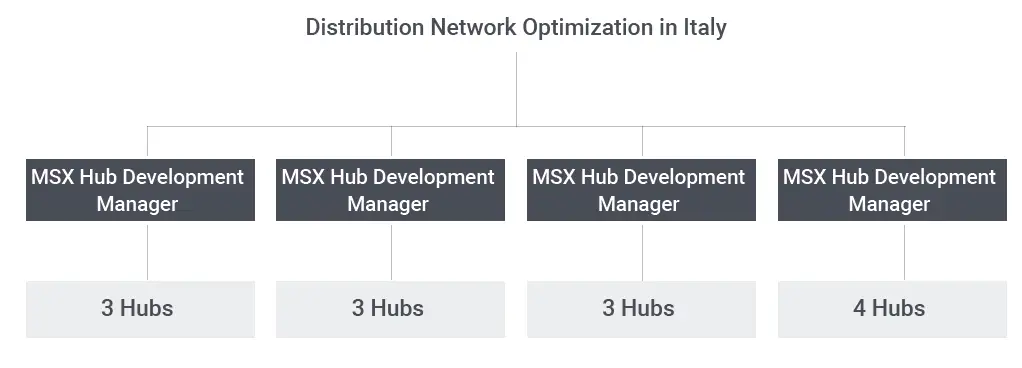
MSX’s data-driven approach provided crucial insights for our client during the launch of their parts distribution hubs in Italy. These analyses included national-level geographic coverage based on UIO (units in operation), advanced stock analysis beyond simple reorder mechanisms, and customer profiling. To optimize the distribution network, 13 hubs were divided equally among four MSX Hub Development Managers, considering the size of each business. Each manager was responsible for a team of nine field resources dedicated to supporting dealers, authorized repairers, and multibrand car service shops. Additionally, a central remote sales team was established to provide further support.

Significant growth and strategic adaptability

Despite its age and numerous iterations, the program demonstrated significant positive outcomes, particularly in its final phase. The multi-brand car service network, which marked the culmination of the project, experienced a remarkable 70% increase in annual parts sales. Additionally, the network expanded by 100 workshops, underscoring the solution’s potential to drive growth and broaden the service network. These impressive results, although specific to the later stages, provide valuable insights into the project’s overall impact and its capacity to stimulate substantial growth.

A key component of the project’s success was the data-driven approach employed by MSX. Utilizing UIO analysis, the team provided critical insights that were instrumental for our client during the launch of their Italian parts distribution hubs. These analyses were heavily relied upon to not only simplify reorder mechanisms but to also include advanced stock optimization strategies. This comprehensive approach ensured that every hub visit was informed by precise and actionable data, enhancing the efficiency and effectiveness of the parts distribution process.

Throughout the project’s duration, flexibility and adaptability were crucial. The evolving landscape required MSX to continuously pivot and adjust their strategies to meet changing circumstances. This ability to remain agile and responsive not only addressed immediate challenges but also positioned the project for long-term success.

The multi-brand Car Service Network, which marked the culmination of the project, experienced a remarkable 70% increase in annual parts sales.

Future considerations: Data-driven insights and collaborative success

Looking ahead, the program is set to build on its foundations, particularly its data-driven approach. The project has proven the critical role that data-driven insights play in optimizing distribution networks. By continuing to leverage advanced analytics and UIO analysis, MSX can further refine stock optimization strategies and enhance the efficiency of parts distribution, which will be pivotal in navigating the complexities of evolving market demands and ensuring sustained growth.

Equally important is the emphasis on collaboration. The success of the project so far has hinged on the strong partnerships between key stakeholders. Effective communication and coordination have been essential in aligning goals and executing strategies seamlessly. Moving forward, fostering these collaborative relationships will remain crucial. By maintaining open lines of communication and working closely with all parties involved, MSX can continue to drive innovation and achieve shared objectives, ensuring the program’s ongoing success and adaptability in a dynamic industry landscape.

Related case studies

Transforming EV lead conversion: Delivering tailored, data-driven customer experiences

Transforming EV lead conversion: Delivering tailored, data-driven customer experiences

Fast facts

European volume OEM

With an excess of electric vehicles returning from leasing contracts, the OEM needed a more personalized approach to optimize customer engagement and sales conversion rates.

Germany

MSX E.COM Personal Landing Page (PLP) program delivered tailored, data-driven experiences for customers, allowing for automated communications and follow-ups, and provided clear options for customers to buy, extend their lease, or opt out.

A European volume OEM found itself with an excess of electric vehicles returning from leasing contracts that needed to be sold or have their lease terms extended. Despite the inherent customer interest, the traditional lead conversion approach lacked the level of personalization needed to optimize customer engagement and conversion rates.

The organization approached MSX with the specific challenge and sought a comprehensive solution that could transform its sales approach. MSX recognized the need for a more dynamic and personalized customer engagement strategy to effectively manage the influx of returning electric vehicles.

Without a digital strategy that could support direct and tailored communication, the OEM’s existing sales processes were proving inefficient. The retail group required a solution that could centralize customer interactions, streamline communications, and drive higher conversions.

MSX implemented its innovative MSX E.COM Personal Landing Page (PLP) program to address the client’s needs. The PLP program is designed to create personalized and OEM branded data-driven experiences for customers by combining advanced software and automated communication strategies.


Introducing personalized digital strategies

To address the challenge, MSX implemented a solution centered around customized PLPs. Each lead, or customer, received a unique landing page tailored specifically to their vehicle details and status in the sales funnel. This personalized approach allowed customers to view offers that were relevant to their lease status and preferences, whether it was to purchase their current vehicle or extend their lease. By providing this level of customization, they could engage customers more effectively and cater to their individual needs.


The system also featured automated communication and engagement, which played a crucial role in maintaining customer interest. Personalized emails and follow-up messages were automatically triggered based on each customer’s response and engagement levels. If a customer did not respond within three days, the system would initiate additional outreach via the PLP or a specialized inside sales agent to keep the customer engaged. This automation ensured that no potential lead was overlooked, and that communication remained consistent and timely.

Each PLP provided customers with three straightforward options: to buy the car, extend the lease, or opt out. This clarity, combined with a user-friendly interface, empowered customers to make decisions on their own terms. By simplifying the choices and making the process transparent, the OEM could enhance customer satisfaction and trust.

The PLP campaign was designed to operate with minimal human intervention, allowing the sales teams to focus on high-potential leads. The automated system managed the bulk of the interactions, ensuring that within two months, all 1,300 customers received a consistent and personalized experience. This approach not only improved efficiency but also allowed the sales team to allocate their efforts more strategically, ultimately driving higher conversion rates.

Each PLP provided customers with three straightforward options: to buy the car, extend the lease, or opt out. This clarity, combined with a user-friendly interface, empowered customers to make decisions on their own terms. By simplifying the choices and making the process transparent, the OEM could enhance customer satisfaction and trust.

The PLP campaign was designed to operate with minimal human intervention, allowing the sales teams to focus on high-potential leads. The automated system managed the bulk of the interactions, ensuring that within two months, all 1,300 customers received a consistent and personalized experience. This approach not only improved efficiency but also allowed the sales team to allocate their efforts more strategically, ultimately driving higher conversion rates.

Transforming sales with automated communication

The introduction of MSX’s PLP program brought several significant benefits to the OEM’s sales process. One of the most notable advantages was the enhanced personalization of customer interactions. Each communication and offer were tailored to the customer’s current situation and preferences, ensuring that every message was relevant and engaging. This level of customization helped build stronger relationships with customers and increased their likelihood of responding positively to the offers presented.

The system automated all communications and follow-ups, which significantly reduced the manual workload for the OEM’s salesforce. This automation ensured that messages were sent in a timely and consistent manner, maintaining customer engagement without the need for constant manual intervention. As a result, the sales teams could focus their efforts on more strategic tasks, knowing that the system was handling routine follow-ups efficiently.

With a centralized platform to track responses and analyze customer behaviors, The group’s sales teams could easily identify and prioritize the hottest leads. This streamlined approach allowed for a more efficient use of resources, as the teams could concentrate on leads that were most likely to convert. The ability to quickly and accurately assess customer interest meant that sales efforts were more targeted and effective.

By combining advanced software with automated communication strategies, the OEM was able to engage customers more effectively and drive higher levels of engagement. The result was a significant increase in conversions, demonstrating the value of a tailored, data-driven approach to customer interaction and sales management.

Optimizing sales with data insights

The results of the PLP campaign were exceptional, showcasing the potential of MSX’s data-driven sales strategies. Out of 1,300 potential leads, the campaign generated over 500 conversions, with 300 customers signing contracts to purchase their vehicles directly through the PLP and an additional 200 supported through other sales channels. This translated into a 43% conversion rate from engaged leads to hot leads, significantly higher than traditional sales methods, demonstrating the effectiveness of personalized communication in capturing customer interest.

They also saw an 80% improvement in segmentation accuracy, allowing them to target their communications more precisely. Additionally, there was a 63% success rate in personalized outreach compared to their standard, non-personalized campaigns. These metrics highlight the efficiency and effectiveness of the PLP program in enhancing customer engagement and driving sales.

By blending innovative technology with human-centric processes, our client was able to achieve superior outcomes, leveraging MSX E.COM’s capabilities to move inventory quickly, engage customers more effectively, and transform their approach to lead management and conversion.

The combination of a tailored PLP solution, data-driven insights, and automated communication resulted in a comprehensive solution that went beyond addressing their immediate challenge. It set a new standard for personalized customer engagement in automotive sales. The program’s success is a clear indicator of how a well-executed PLP solution can drive tangible business results, paving the way for future implementations across their network.

More than 500 conversions, including 300 direct purchases and 200 through other channels.

Conversion rate from engaged leads to hot leads.
0 %
Improvement in segmentation accuracy.
0 %
Success rate in personalized outreach compared to standard campaigns.
0 %

Related case studies

The need for event-driven recall management in the automotive industry

The need for event-driven recall management in the automotive industry

As vehicle recalls continue to rise, with millions of cars on the road deemed too dangerous to drive, the automotive industry faces mounting pressure to manage these situations effectively. This trend is evident across North America and Europe, where the number of recalls is increasing due to various factors, including the growing complexity of vehicle technology and stricter regulatory scrutiny.

Understanding the recall landscape

Several factors contribute to the rising number of recalls:

Increased complexity​

Modern vehicles incorporate advanced technology, making them more prone to issues that can lead to recalls.

Regulatory pressure​

Agencies like NHTSA in the U.S. are vigilant in ensuring consumer safety, prompting recalls even from minor issues that could affect a vehicle’s operation.

Manufacturing challenges

The post-COVID environment has accelerated production, allowing for quicker delivery of vehicles. With effective cost-saving measures in place, manufacturers are providing operational vehicles to customers promptly, but some vehicles may require maintenance after purchase.

Supply chain issues

The ongoing chip shortage and other material constraints have also disrupted the production process, leading to defects that necessitate recalls.

These challenges, if managed properly, can turn recalls into an opportunity to strengthen customer relationships. By addressing these issues proactively, manufacturers can enhance customer trust and satisfaction.

Modular Recall Management: Ensuring cohesion and flexibility

MSX Recall Management offers a comprehensive solution for navigating the complexities of recalls. The orchestration of recall management involves a modular approach, providing flexibility to support specific areas of the recall process while ensuring all stakeholders and actions are aligned.

Delivering speed, efficiency, and customer focus

By performing repairs as quickly as possible, we aim to minimize any inconvenience to our customers. Our approach offers the most cost-effective solutions, setting up the team and the program rollout, balancing costs, resources availability, and time for the execution.

The execution of the recall can take various forms, such as enhanced dealer capacity and on-site events designed to provide consistent, efficient, and scalable recall solutions. These events could take place at locations like mall parking lots, stadiums, or amusement parks. To reach older vehicles, it can be beneficial to include reconditioning or auction centers in the strategy.

Event-driven recall ensures excellence and efficiency

Our event-driven recall process is meticulously designed to ensure maximum execution and customer satisfaction. Upon arrival, with or without appointment, customers are greeted and provided with refreshments while their vehicle undergoes the necessary recall repairs. Once the repair is complete, the vehicle is promptly returned to the customer, ensuring a seamless and pleasant experience.

MSX oversees the entire deployment of the recall event, from program management to securing permits and insurance. Our dedicated team thoroughly prepares for each event, understanding the types of vehicles expected, the tools required, and the number of participants. We handle everything from location identification and logistics to staff selection and facility management, ensuring a comfortable environment with amenities such as food, heating/AC, medical assistance, and security. Additionally, we manage customer outreach, including contact and booking, to ensure a smooth process from start to finish.

Effective event management requires an experienced team to handle complex preparations and planning. Coordination across various departments is crucial, involving sales for new vehicles, parts departments for recall shipments, marketing and social media for awareness, and field operations for on-site support. Each event demands constant effort and precise planning to meet deadlines, often followed by another event in a different city, necessitating a well-organized plan to maintain efficiency and success.

Advantages of outsourcing recall management

By leveraging MSX expertise for event-driven recall management, manufacturers can benefit from specialized expertise in planning and executing recall events. This includes:

Experienced teams handle logistics, permitting, staffing, and customer outreach, ensuring a smooth execution without burdening the manufacturer’s existing workforce.

Agencies like NHTSA in the U.S. are vigilant in ensuring consumer safety, prompting recalls even from minor issues that could affect a vehicle’s operation.

With a focus on customer satisfaction, MSX teams can create welcoming environments that foster trust and goodwill.

Turning recalls into opportunities

As the automotive industry continues to grapple with the rising tide of recalls, event-driven recall management presents a compelling solution. By embracing a strategic approach that prioritizes customer experience and operational efficiency, manufacturers can not only navigate the complexities of recalls but also turn them into opportunities for building lasting relationships with their customers.

Contact the Author

Pasquale_aloi.png.png

Pasquale Aloi

Global Solutions Leader, Warranty and Repair Efficiency

Pasquale_aloi.png.png

Pasquale Aloi

Global Solutions Leader, Warranty and Repair Efficiency

Related Articles

Five success factors to transforming your executive training program: Bridging the training gap in the mobility industry

Five success factors to transforming your executive training program: Bridging the training gap in the mobility industry

Bridging the training gap in the mobility industry

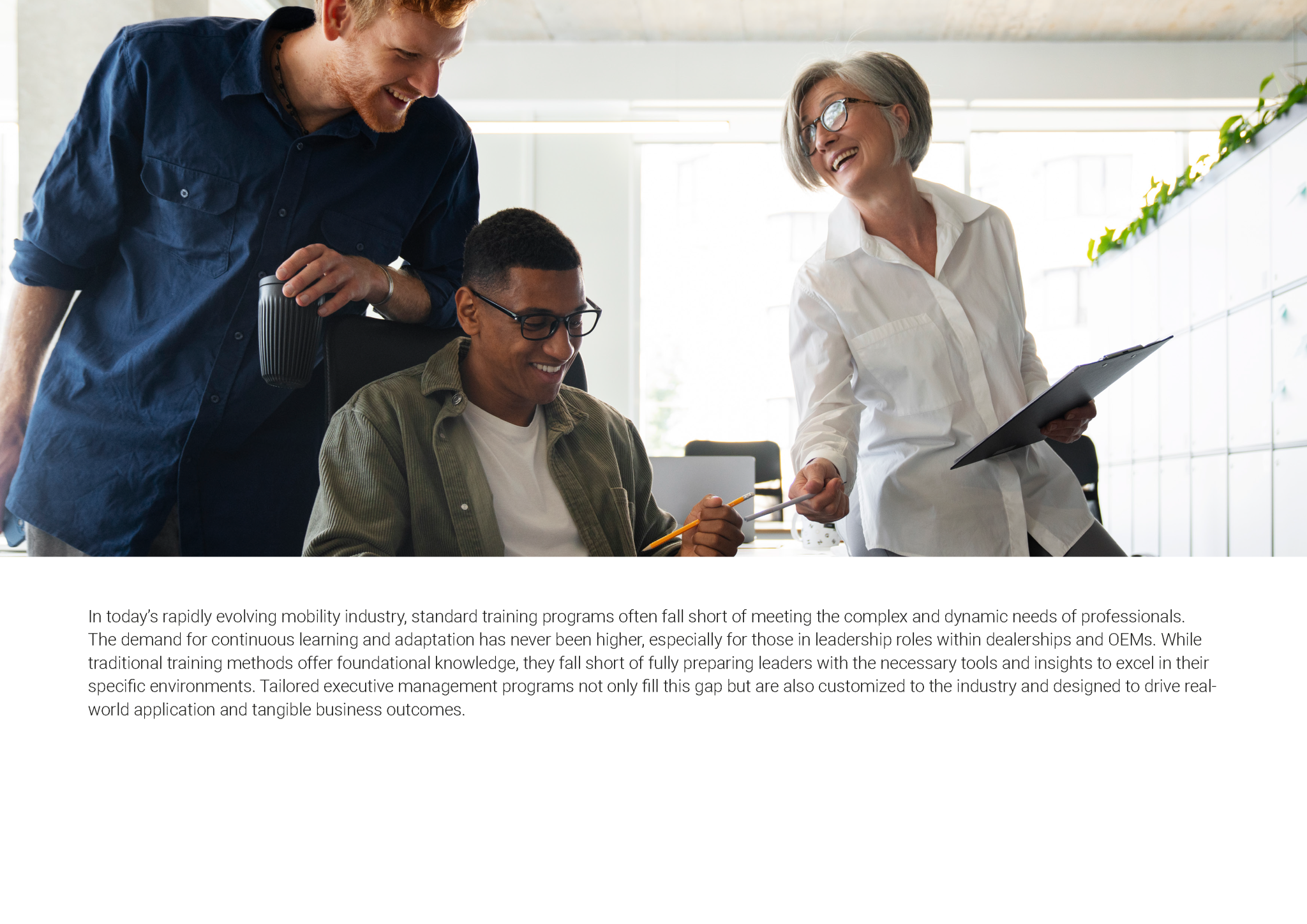
In today’s rapidly evolving mobility industry, standard training programs often fall short of meeting the complex and dynamic needs of professionals. The demand for continuous learning and adaptation has never been higher, especially for those in leadership roles within dealerships and OEMs. While traditional training methods offer foundational knowledge, they fall short of fully preparing leaders with the necessary tools and insights to excel in their specific environments.

In this report, we uncover how tailored executive management programs not only fill this gap but are also customized to the industry and designed to drive real world application and tangible business outcomes.


To stay informed about upcoming reports and events from MSX, submit your details below.
Don’t miss out on new insights and discussions with our leadership team.

We’d love to hear from you

If you’d like to know more about MSX or how we can support your business, please fill out the form below.


Related Articles

Is convenience killing the automotive service industry? A deep dive into the future of customer experience

Is convenience killing the automotive service industry? A deep dive into the future of customer experience

In the modern automotive landscape, convenience has evolved from a preference to an essential element in the customer experience. As we navigate through the complexities of automotive retail, understanding and integrating convenience into the service experience has become crucial for retaining customer loyalty and staying competitive.

In today’s fast-paced world, customers value their time more than ever, and the demand for convenience is influencing how services are delivered across various industries. According to Gartner, integrating retail inventory, such as automotive parts, with IoT technology enhances visibility, which is a critical first step in enabling omnichannel fulfillment. This improvement subsequently boosts retail operations and enhances customer experiences.

In automotive services, convenience directly impacts customer satisfaction, loyalty, and overall brand perception. The ability to offer a seamless, hassle-free service experience can significantly differentiate a brand from its competitors, especially as the demand for electrification accelerates.

As manufacturers understand the importance of convenience to their brand, they must examine their own strategies and make future projections that encompass transformative technologies and harness the insights gathered from business and performance data to deliver convenience for their customers.

But while convenience offers a strategic advantage, the question at the heart of developing services that meet and exceed customer expectations is, “How does the customer want to engage in the service experience?” Providing convenience is about respecting the customer’s time and preferences, thereby fostering a positive and lasting relationship. Here, we delve into the current landscape of convenience within the automotive service sector, examine strategies for delivering customer ease, and explore the future of customer convenience in the automotive service environment.

The current state of convenience

The importance of customer convenience is evident in several key areas of the automotive service environment, including the shift from traditional phone-based appointment scheduling to digital solutions, the growing preference for real-time communication, and the challenges posed by technician shortages and increased vehicle numbers. These developments reflect a broader trend towards meeting customer needs more efficiently and effectively in today’s fast-paced world.

Appointment Scheduling

The traditional mode of scheduling appointments via the telephone is rapidly being replaced by digital alternatives. Customers now prefer using alternative channels such as SMS, online booking systems, and mobile apps to schedule and manage their service appointments. This shift not only streamlines the process but also aligns with the communication preferences of younger generations.

Communication

Effective communication is fundamental when it comes to convenience. The preference for text messaging over telephone calls or emails highlights the need for real-time, accessible updates on vehicle status. Implementing technologies like SMS text messaging, short codes and automated status updates can enhance the customer experience by keeping them informed without overwhelming them. This shift to preferred communication channels can lead to higher satisfaction and fewer missed appointments.

Capacity and Availability

One of the biggest challenges is the lack of appointment availability due to technician shortages and an increasing number of vehicles on the road. Addressing these capacity issues through optimized scheduling, lean processes, and mobile service options can significantly improve convenience. “The inability to get an appointment in a timely manner is the number one factor affecting customer defection and dissatisfaction.”

Mobile Services

The introduction of mobile service offerings is a testament to the demand for convenience. Mobile service units cater to customers who may find it difficult to visit the dealership, such as night-shift workers, students, or individuals with disabilities. These units not only provide essential services at the customer’s home or place of work, but also help form stronger customer-technician relationships.

Where we are today

The automotive industry is already leveraging several strategies to enhance convenience, and it is continuing to revolutionize it through advanced technological integration, lean processes, and data analytics. Dealers now use sophisticated tools and methodologies to streamline workflows, reduce waste, and provide quicker, more accurate services. Real-time data analytics further enable customized, efficient solutions, significantly enhancing the overall customer experience.

Technological Integration

By adopting advanced scheduling tools, service lane technologies, and multipoint inspection systems, dealers can not only improve operational efficiency and parts inventory management, but also provide customers with quicker, more accurate service. A report from June 2024 conducted by Frost and Sullivan revealed that tires and batteries are one of the most popular product categories sold through online-to-offline channels thanks to the convenience of ordering and fulfillment. This technological integration is vital in streamlining processes and reducing wait times, enhancing the overall service experience.

Lean Processes

Implementing lean methodologies to streamline workflows, reduce waste, and increase throughput is becoming increasingly common. Express services and mobile service options are examples of how lean processes can enhance convenience. By identifying and eliminating inefficiencies, dealerships can improve service speed and reliability.

Data Analytics

Using data analytics to monitor performance and identify areas for improvement allows dealerships to customize solutions based on real-time data, ensuring a more targeted and efficient service experience.

The future of convenience

As the automotive industry evolves, the future of convenience in servicing vehicles is set to be transformed by emerging technologies and innovative service models. These advancements will not only streamline operations but also enhance the customer experience by providing more efficient, accurate, and proactive service solutions.

AI and Predictive Analytics

The integration of artificial intelligence (AI) and predictive analytics will revolutionize how services are delivered. AI can assist in diagnosing issues, optimizing workflows, and even predicting when a vehicle will require a service. This predictive capability will allow dealers to proactively manage service schedules and reduce downtime for customers. “AI can be used to help us in the service drive with customer service performance and service workflows.”

Connected Cars

As connected car technology continues to advance, vehicles will soon be able to communicate directly with service centers, providing real-time data on their condition. This will enable more accurate diagnostics and timely interventions, further enhancing convenience for customers. Connected cars will not only notify the OEM when a service is needed but will also provide detailed information to the service center, reducing diagnostic time and improving repair accuracy.

Specialized Service Outlets

The separation of sales and service experiences will become more evident with the introduction of new retail models. We will see an increase in the number of specialized service outlets catering to alternative drive trains that will allow for more efficient and specialized service delivery.

Mobile and Autonomous Services

The future may see an increase in mobile service units and even autonomous vehicles that can drive themselves to service centers at night. While fully autonomous servicing is still a way off, the trend towards mobile and flexible service options will continue to grow. This evolution will provide unparalleled convenience, allowing for services to be performed with minimal disruption to the customer’s daily routine.

Embrace the future: Redefining convenience in automotive servicing

As the customer demand for convenience increases, manufacturers must understand and adapt to their needs, leveraging technology, and optimizing operational processes to significantly enhance the customer experience. MSX White Paper, “Perfecting the car buying journey: Virtual, human, or the best of both worlds?” has revealed that while customers have expressed a clear desire for some form of human interaction, they also demand the convenience of digital channels. As we look to the future, the continued integration of AI, connected car technology, and specialized service models will further redefine convenience, ensuring that automotive services remain aligned with customer expectations and industry advancements.

MSX’s tailored solutions analyze performance data and identify weaknesses in existing operational processes that help you deliver exceptional customer experiences while optimizing factory to customer supply chain costs.

We combine research, analysis, technology and expertise with proven delivery strategies to help brands engage new customers, recapture business from competitors, and to innovate the customer’s experience throughout their aftersales journey.

Contact the Author

Lois-Valente

Lois Valente


Global Solutions Leader of Parts, Accessories & Service Performance

Lois-Valente

Lois Valente

Global Solutions Leader of Parts, Accessories & Service Performance

Related Articles

Empowering employees: Offering insight, improving performance

Empowering employees: Offering insight, improving performance

Fast facts

Leading automotive manufacturer

Consultancy and coaching help dealer employees gain financial and operational knowledge to improve network performance.

Asia Pacific

MSX Performance Consulting Program, supported by Insight BM

Playing a proactive role

MSX is helping a leading OEM reinforce and strengthen the performance of its Asia Pacific-based dealer network with a comprehensive, face-to-face dealership consulting program.

It includes dealer coaching to equip employees with a better understanding of the business, and dealer performance improvement programs (DPIPs) which involve deep-dive discussions.

MSX helps dealer staff to take a more proactive role in business management and performance, helping them to understand issues and opportunities, develop action plans, and set priorities. MSX technology, Insight BM, generates financial reports that help the team identify which dealers need the most support and in what areas of business.

Creating informed decisions

The OEM wanted to educate dealer employees on how to use business management data to drive performance.

Employees understand their roles, but don’t always know how to prioritize the often-overwhelming numbers of tasks they undertake. The organization understood that by making information such as financial data and key performance indicators (KPIs) easier to access and more transparent, employees would better understand how their decisions and actions can influence different areas of the business.

The OEM turned to MSX to help employees understand operational, financial, and management information, and to teach them how to interpret the numbers that support the business. The team identifies dealerships that need the most support, and then empowers employees with information, helping them make more informed decisions that drive performance.

Giving dealers direction

MSX deployed its Performance Consulting Program within the organization in 2021.

It includes an educational component, in which the MSX team offers face-to-face consulting to educate dealers and middle managers on the foundations of KPIs and how they affect performance. In addition, MSX dealer performance improvement programs (DPIPs) offer employees an additional four meetings a year. During these sessions, the team performs an in-depth examination of the dealership’s performance and KPIs – from financial KPIs to process, satisfaction, and people-related KPIs – and identifies issues and opportunities. The program’s competence enhancement element helps the team create highly targeted action plans and set objectives, which are measured for effectiveness and adapted later if needed. The team also trains staff in managing expenses and operational assets with greater efficiency.

The MSX Insight BM platform supports the program by generating performance reports that enable the team to identify the dealers they need to focus on, track KPIs, and monitor the outcomes of dealers’ activities.

Key Components of the Consulting Program

  • Thorough Performance Analysis

    Rigorous examination of KPIs across all departments.

  • Actionable Insights

    Identification of issues and opportunities, leading to a quantifiable action plan.

  • Competence Enhancement

    Training and development initiatives for the Original Equipment Manufacturer (OEM) field force to effectively implement action plans between consulting sessions.

  • Discipline and Focus

    Cultivation of a disciplined culture emphasizing ongoing improvement (kaizen).

  • Expense Management

    Proactive control and efficiency in managing dealership expenses.

  • Asset Optimization

    Lean and efficient management of operational assets.

Observations and results

Dealerships enrolled in the consulting program exhibit notable improvements compared to their non-engaged counterparts.

  • Discipline and Focus

    Increased emphasis on operations and continuous improvement.

  • Financial Resilience

    Demonstrated ability to weather economic downturns with reduced losses or sustained growth.

  • Balanced Contribution

    Achievements of a well-balanced performance across all dealership departments.

  • Expense Management

    Proactive control and efficiency in managing expenses, leading to sustainable profitability.

Impact on Dearlership Network Health

  • Program vs. Non-Program Dealers

    Non-program dealers had a 0.5% ROS increase in 2022 but faced a 0.8% decline in 2023. Program-enrolled dealers helped the OEM maintain and slightly increase overall ROS.

  • Consistent Improvement

    Program-enrolled dealers improved their ROS by 1% in both 2022 and 2023

  • Fixed Operation Absorption (FOA)

    Inflation led to higher overhead costs, outpacing fixed operation gross profit growth in 2023, causing FOA erosion. Dealers in the program improved FOA by 2.8 points in 2022 but faced a 9.8-point drop in 2023. However, their FOA was more resilient compared to non-program dealers.

  • Enhanced Resilience:

    Program dealers showed better expense control and after-sales operations, resulting in increased FOA despite overall network declines.

  • Stronger ROS Growth

    Dealers in the MSX Performance consulting program showed robust ROS growth, even in the challenging 2023 inflationary environment.

Supporting stronger dealerships

The OEM has seen a considerable improvement in performance across its networks.

Better financial insight has enabled the delivery of targeted, customized strategies for improvement precisely where they’re needed. Stronger business understanding and common goals have helped improve relationships between the OEM and dealers, and upon experiencing the benefits to their teams, many dealers have become advocates of the program, bringing it to a wider audience within the network.

With the layers of education now in place, the OEM and its dealers are fully prepared for peaks and troughs in performance, and the OEM has already been able to mitigate losses throughout the unfavorable economic periods of the last few years. In fact, enrolled dealers have achieved some significant improvements, and while those not taking part in the MSX program have seen a decline in some areas, the organization has still managed to protect and increase its overall return on sales (ROS).

Impact on Dearlership Network Health

  • Program vs. Non-Program Dealers

    Non-program dealers had a 0.5% ROS increase in 2022 but faced a 0.8% decline in 2023. Program-enrolled dealers helped the OEM maintain and slightly increase overall ROS.

  • Consistent Improvement

    Program-enrolled dealers improved their ROS by 1% in both 2022 and 2023

  • Fixed Operation Absorption (FOA)

    Inflation led to higher overhead costs, outpacing fixed operation gross profit growth in 2023, causing FOA erosion. Dealers in the program improved FOA by 2.8 points in 2022 but faced a 9.8-point drop in 2023. However, their FOA was more resilient compared to non-program dealers.

  • Enhanced Resilience:

    Program dealers showed better expense control and after-sales operations, resulting in increased FOA despite overall network declines.

  • Stronger ROS Growth

    Dealers in the MSX Performance consulting program showed robust ROS growth, even in the challenging 2023 inflationary environment.

Enrolled dealers have become

more resilient.

Enrolled dealers improved ROS by

1% in 2022 and in 2023.

Enrolled dealers have increased

fixed operation absorption.

To find out more about how MSX Performance Consulting Programs can help your business, visit:

Related case studies

Revolutionizing automotive retail: The impact of personalized marketing

Revolutionizing automotive retail: The impact of personalized marketing

In today’s consumer-driven landscape, where relevance, efficiency and personalization are paramount, the evolution from mass marketing to personalized strategies has transitioned from a trend to a strategic imperative. This shift is poised to elevate customer engagement, bolster brand loyalty, and drive business success.

The essence of a tailored automotive marketing strategy

Personalized marketing is a customer-centric approach that utilizes data-driven insights to deliver experiences, messages, and offers tailored to individual needs, preferences, and behaviors. The core of this model is its ability to forge deeper connections with customers, fostering relevance, elevating satisfaction, and ultimately, driving conversions.


Relevance and efficiency

Creating individualized customer communications ensures each interaction is meaningful and related to the intended customer. By presenting relevant information, it streamlines the customer’s journey, reducing the time and effort customers spend searching for what they need.

Enhanced customer experience

Customers value feeling appreciated and understood. Personalized experiences make customers feel acknowledged and catered to, leading to a higher level of customer satisfaction and brand loyalty.

Increased conversion rates and retention

Targeted experiences resonate more with customers, leading to higher conversion rates and improved customer retention.

Data-driven insights

The application of data analytics results in better product recommendations, service offerings, and enhanced customer service. It enables brands to anticipate and proactively address customer needs.

Applications in the automotive industry

In the automotive industry, personalized marketing can take on various forms. By leveraging customer data and analytics, automotive companies can offer tailored vehicle recommendations that align with individual preferences, needs, and budgets, increasing the likelihood of conversion. Analyzing individual vehicle usage and maintenance history enables companies to send customized service reminders, ensuring timely maintenance and boosting customer satisfaction. Personalized marketing allows automotive companies to present financing options that accommodate the individual financial circumstances and preferences of each customer, facilitating a smoother purchasing process. Meanwhile, through targeted marketing communications, automotive brands can convey relevant offers, promotions, and information, fostering engagement and building enduring customer relationships. By aligning their offerings with customer needs and preferences, automotive companies can elevate the customer experience and drive business success.

Challenges and opportunities

While personalized marketing brings numerous benefits, it also poses obstacles that automotive companies must overcome. Challenges related to data privacy and security, technology integration, and measuring success are pivotal considerations in implementing personalized strategies.

Data privacy and security

Given the reliance on customer data, automotive companies must address data privacy and security concerns, ensuring regulatory compliance and building trust with customers.

Technology integration

Integrating advanced technology and tools is vital for crafting targeted experiences. Automotive companies need to stay updated on technological advancements and adapt to emerging trends to maintain competitiveness.

Measuring success

Establishing and measuring success is essential for assessing the efficacy of personalized marketing strategies. Automotive companies need to define clear KPIs and continuously monitor and adjust their strategies to achieve the desired outcomes.

Using data to enhance the service offering

But the generation of customer-centric data allows automotive companies to introduce preventative and pre-emptive services. An article from S&P Global Mobility, published in Sept 2023, suggests that the rise in powertrains and the consequent increasing portfolio of vehicles mean that manufacturers must adjust their marketing budget across a broader lineup, and every marketing campaign and initiative must be tailored to serve a specific customer to ensure maximum return.

By harnessing the power of advanced analytics and telematics, OEMs can offer predictive maintenance, giving customers real-time insights into their vehicle’s health and proactively scheduling maintenance or repairs based on actual usage patterns. This data-driven approach enables automotive companies to not only enhance safety and reliability but also reduce the overall cost of ownership for their customers. Additionally, it paves the way for personalized driving tips and efficiency recommendations, promoting a more eco-friendly and economical driving experience. In this data-driven era, automotive companies are not just selling vehicles; they are selling peace of mind and a more seamless, informed, and customized ownership journey.

Driving customer-centric innovation

The automotive industry is at the forefront of creating personalized, relevant, and valuable customer experiences. Driven by consumer demand, this personalized marketing model emerges as a beacon of innovation, providing a pathway to enhanced customer experiences, stronger relationships, and sustained business growth. As automotive companies continue to adopt this approach, the road ahead is filled with opportunities. The journey towards a future where every interaction is personalized, every experience is relevant, and every engagement adds value is well underway, with the automotive industry leading the way in redefining customer relationships and setting new standards for customer-centric excellence.

Contact the Author

Michele_Esposito

Michele Esposito

 Global Solutions Leader, Consumer Engagement

Contact the Author

Michele_Esposito

Michele Esposito

Global Solutions Leader, Consumer Engagement


Related Articles

Sky high ROI: Trade parts program achieves 600% ROI

Sky high ROI: Trade parts program achieves 600% ROI

Fast facts

Premium, global automotive manufacturer

Enhance trade parts operations and unlock greater potential

17 markets across Europe, North America, China, and South Africa

A customizable, modular trade parts strategy designed to transform the client’s ordering processes, pricing, and inventory management

Expanding parts’ potential

The trade parts business serves as a powerful catalyst for driving revenue and forging a strong foothold in the automotive market.

Amidst the proven successes of one of the world’s most esteemed automotive manufacturers, lay an exciting opportunity to enhance its trade parts operations further and unlock even greater potential. By implementing a well-structured wholesale parts program, effective marketing strategy, and streamlined data capture mechanism, the OEM expanded further in the fiercely competitive trade parts market.

Setting ambitious goals

The vehicle manufacturer engaged MSX for its visionary consultancy and to provide the necessary tools and solutions needed to empower its trade parts business in 17 markets across Europe, North America, China, and South Africa.

To unlock the brand’s true potential, MSX explored its existing trade parts activities, while embracing new opportunities and cultural factors. The goal was to develop a customizable trade parts strategy that would exceed expectations and propel the organization towards unparalleled success and achievements.

Employees are better equipped to sell and promote trade parts.

Exploring market opportunities

Having identified the different ways in which dealers manage their wholesale parts across each market, MSX designed and delivered a solution that comprised nine modules.

Each module focuses on a different area of the business, enabling individual markets to choose the specific elements that fit their needs. Delivered through a combination of people, process and technology, these modules address the needs of independent repairers and body shops, providing an easy way to buy and order parts, secure competitive prices, and ensure parts are in stock and delivered on time.

Through continuous evolution, small-scale marketing efforts have evolved into longer-term promotions, such as the ‘parts basket’ – a rebate program between dealers and the OEM that provides repairers and body shops with competitively-priced, preselected common parts. With the creation of a powerful data portal, MSX also enables teams to identify insights from global operations, further aided by dedicated data analysts examining the data daily to unveil opportunities and increase parts sales.

Celebrating brand success

The deployment of this program has proven to be transformative, empowering the brand to expand its new modular approach from a local to a global initiative.

MSX coaches continue to help dealers develop partnerships with their independent repairer customers, strengthening relationships and instilling trust and transparency. Employees are better equipped to do their jobs, with greater knowledge of the fundamentals of selling trade parts, and the tools to actively promote them to repairers and body shops.

The OEM is more informed thanks to comprehensive data analysis and reporting, allowing the team to focus on areas of the business most likely to generate revenue. The brand can introduce new strategies and implement offers and incentives to drive sales. Moreover, by understanding trends and patterns in data, it can respond to business fluctuations quickly and accurately.

New online parts sales channels have made transactions more efficient for dealer and trade customers, who are also more informed thanks to access to technical information about their vehicles. Targeted campaigns add further incentives for customers who receive rewards or discounts, for example, if they purchase more parts in a transaction.

Program achievements

Driving customer satisfaction

Since its initial set-up in 2014, the program has continued to grow significantly, with an average turnover of 19% per year and an impressive return on investment of 600%.

The program has also shown to enhance the proficiency of the dealer network, inspiring greater commitment and engagement from NSCs and dealers, and resulting in more satisfied customers.

Overview

Benefits

MSX program examples

Independent aftermarket strategy implementation

Dealers in coaching
~ 0
Focus customers
~ 0
Approximate parts sales value through program
0 bn €

Securing the future

The implementation of more efficient processes that accompany them enable each market to continuously improve.

More recently, and with the support of cutting-edge technologies, the program has successfully introduced innovative dealer coaching practices and new marketing activities in line with the industry’s rapid evolution. Meanwhile, MSX continues to work with the brand, investigating new distribution models and partners to increase parts availability and delivery speed to further improve customer satisfaction. Together, they are also exploring the use of artificial intelligence and machine learning to help identify opportunities and deliver tailored, accurate and personalized offers to customers.

0 %

Average – Year on Your Growth

0 :1

ROI

Find out more about how MSX Trade Parts solutions can help your business:

Related case studies

Raising the bar: Transformational warranty solution exceeds expectations

Raising the bar: Transformational warranty solution exceeds expectations

Fast facts

Luxury, global automotive manufacturer

Fragmented processes, tools and policies resulted in warranty inefficiencies and lack of transparency

Europe and importers

A centralized warranty hub formalizes global warranty operations and management, boosting accuracy and compliance.

Rethinking warranty operations

For many OEMs, modernizing warranty operations represents a strategic move towards greater efficiency, creating opportunities to streamline processes, integrate multiple data streams and emerging technologies, and accommodate new requests.

This was the goal of one luxury, global brand, whose disparate databases, processes, and internal systems led to a high degree of fragmentation. Despite its global warranty policy, most markets were working in a customized, stand-alone manner. The OEM needed to handle these challenges cost effectively, while ensuring customer needs were met.

Female apprentice in her 20s smiling towards camera

Improvements in compliance and quality, speed, and satisfaction exceed expectations.

Commitment to excellence

The brand established a strategic partnership with MSX, delivering continuous improvement across all European national sales companies and more than 100 global importers.

Following a strategic feasibility study, MSX designed a comprehensive solution to ensure all claims processes are compliant with policies and procedures. The solution enhances dealer performance, improves warranty processes, and helps manage the audit process, while increasing the service level in terms of effectiveness.

MSX’s comprehensive solution met the brand’s five key objectives

  • Ensuring the compliance of manually assessed claims

  • Supporting dealers in warranty handling

  • Ensuring the compliance of audit procedures

  • Support the OEM with 360 warranty services

  • Compatible with the launch of a new sales organization model

MSX worked closely with the OEM to define a roadmap that focused on continuous improvement and ensured the best delivery method for the new strategy. The approach included a robust warranty management center, which centralizes warranty handling across the organization.

The newly established MSX Warranty HUB comprises a Claim Review Hub as well as an Audit Hub, both with dedicated resources coordinating prior approval, goodwill authorization, claims assessment, coaching and audit delivery from a central location. The hubs apply central regulations and, using specialized tools, collate data across all markets. An integrated Business Intelligence Team works with these tools to interrogate real-time data and deliver complex reporting dashboards that can be used to measure performance and support the ongoing flexibility and adaptation of the project.

Quality and satisfaction soar

To date, MSX’s unique solution has achieved a 5:1 return on investment and has transformed the customer’s warranty operations, delivering remarkable achievements in compliance and quality, speed, and satisfaction.

Through rigorous adherence to industry standards, MSX has ensured that the solution meets the highest compliance benchmarks while reducing downtime and supporting operational efficiency.

faster on dealer enquiry resolution time vs target
0 x
improvement on claims processing time
0 x
of audit reports completed in under 1 day
> 0 %

By improving the overall enquiry resolution with a higher level of speed and accuracy, MSX has helped instill confidence across the dealer network and in customers and stakeholders.

Enquiries resolution rate without escalation
0 %
Overall claims quality
0 %
of Dealers supported by coaching improved after visits and avoided a warranty audit
0 %

The focus on improving support has resulted in increased dealer satisfaction and the reinforcement of brand loyalty.

of dealers declared Very Satisfied / Satisfied with HUB Warranty services
0 %
OEM net promoter score on MSX program
0 %
of audit chargeback accepted onsite
0 %

Find out more about how MSX Warranty solutions can help your business.

Related case studies

Outside-the-box learning: New ecosystem boosts engagement by 30%

Outside-the-box learning: New ecosystem boosts engagement by 30%

Fast facts

Luxury brand with a global presence

The OEM focused on sales figures and customer satisfaction for gauging performance success, neglecting essential factors such as learner engagement.

Asia Pacific (including Australia, New Zealand, Japan and Korea)

As part of a broader initiative to improve the brand’s learning capabilities, MSX helped it refocus on learner engagement to measure ROI on learning spend.

Focus on engagement

Automotive retail networks often prioritize sales figures and customer satisfaction as key metrics for assessing their performance, yet many overlook learner engagement as a critical factor when evaluating their business impact.

MSX helped a luxury automotive brand organization with a presence in 18 global markets to implement a strategic initiative aimed at improving the OEM’s overall learning capabilities. MSX helped the OEM to redirect its focus towards learner engagement as a primary way of measuring return on investment on its learning spend.

MSX created a new learning ecosystem as part of the Regional Learning Academy, with a mission to revitalize educational initiatives across the region’s retail network.

The program boosted engagement by 30%, its highest level in the brand’s history.

Weed out inefficiencies

The global OEM’s existing solutions did not meet the needs of its retail network, with less than 7% of the content under two years old.

MSX assessed the existing e-learning framework, identifying opportunities for refinement and optimization, by applying a comprehensive scoring system. The system determines a program’s engagement adequacy, aiming for a minimum of 6 or 7 out of 10. The client‘s latest program scored a mere 2 out of 10.

In addition, the system wasn’t accessible via mobile devices, with further access issues across regions. Consequently, some markets created their own content using a different LMS altogether. The inconsistent approach across a broad geographical area was detrimental to learning engagement within the organization.

Make learning easier

MSX tapped into the organization’s existing learning program, creating a learning ecosystem with versatile mobile capabilities and scalable opportunities for continuous improvement.

The new solution enables employees to engage with learning content via their mobile devices and, through a single sign on, access multiple platforms, such as peer-to-peer learning.

Build in the rewards

The business can identify knowledge gaps and better support employees as they learn in the flow of work, driving engagement through personal achievement and motivation.

The peer-to-peer learning tool acts as a live needs analysis of the business, allowing MSX to identify knowledge gaps from the questions being asked. A resource library – linked to quizzes – also allows learners to access material and learn in the flow of work.

The Centrical platform links to business KPIs and has the capability to extract, edit, and condense portions of e-learning content from the existing LMS, crafting concise microlearning modules. In addition, gamified learning and data-driven video scenarios enable MSX to offer a diverse array of training interventions through the rapid authoring component within the platform.

The platform also drives engagement through recognition of personal achievements, offering rewards embedded within a virtual classroom broadcasting tool. It allows users to track their own performance, see how they’re impacting directly on KPIs, and monitor their performance against their peers, motivating them to learn more.

The single LMS also provides MSX with access to data that can be extracted and used to offer additional, more personalized, or relevant content, and build personalized learning pathways for each individual employee.


Fix-it-right-first-time rates have risen by 23%, and service satisfaction has grown.

Watch engagement soar

Increased learner engagement has directly influenced fix-it-first-time rates, service satisfaction and employee retention, which have risen significantly.

The program has boosted overall learner engagement by 30% across the region, reaching its highest level in the history of the organization. It was found that in the lowest performing markets, learner engagement has grown from 17% to 67% in three months. Technicians and service personnel are more engaged, and their overall performance has dramatically improved. Fix-it-right-first-time rates have risen by 23% and consequently service satisfaction has gone up. The brand has also seen vehicle and accessory sales increase, resulting in a rise in sales satisfaction.

Follow-up surveys have revealed a rise in employee satisfaction and staff retention. Technician retention is also up by 16%, which is particularly important to the client’s success.

In a quote from the client’s Network Development Director, he claims that “By adopting MSX’s suggested approach, the impact on our business has been quite profound. By actively measuring and focusing on learning engagement, we continue to realize a range of positive impacts in all of our core business KPI’s as well as our employee and customer experience. As a business this has us now approaching the future with a much higher degree of confidence.”

Rethink long-term learning

After crafting a competence development strategy, MSX successfully redirected the OEM‘s focus towards future needs, pinpointing fresh roles within the evolving agency model.

This encompassed transforming its signature sites into digital platforms, meticulously evaluating the delivery and implementation of new technologies, and gradually preparing the brand for a successful future.

Increase in learner engagement
0 %
Rise in service satisfaction
0 %
Improvement in sales satisfaction
0 %
Rise in Net Promoter Score
0 %

To find out more about how MSX Learning solutions can help your business.

Related case studies